
Dorien Bauwens
You don't need to know everything to create impact
Company: Athumi
Job title: Lead Ecosystem Building Services
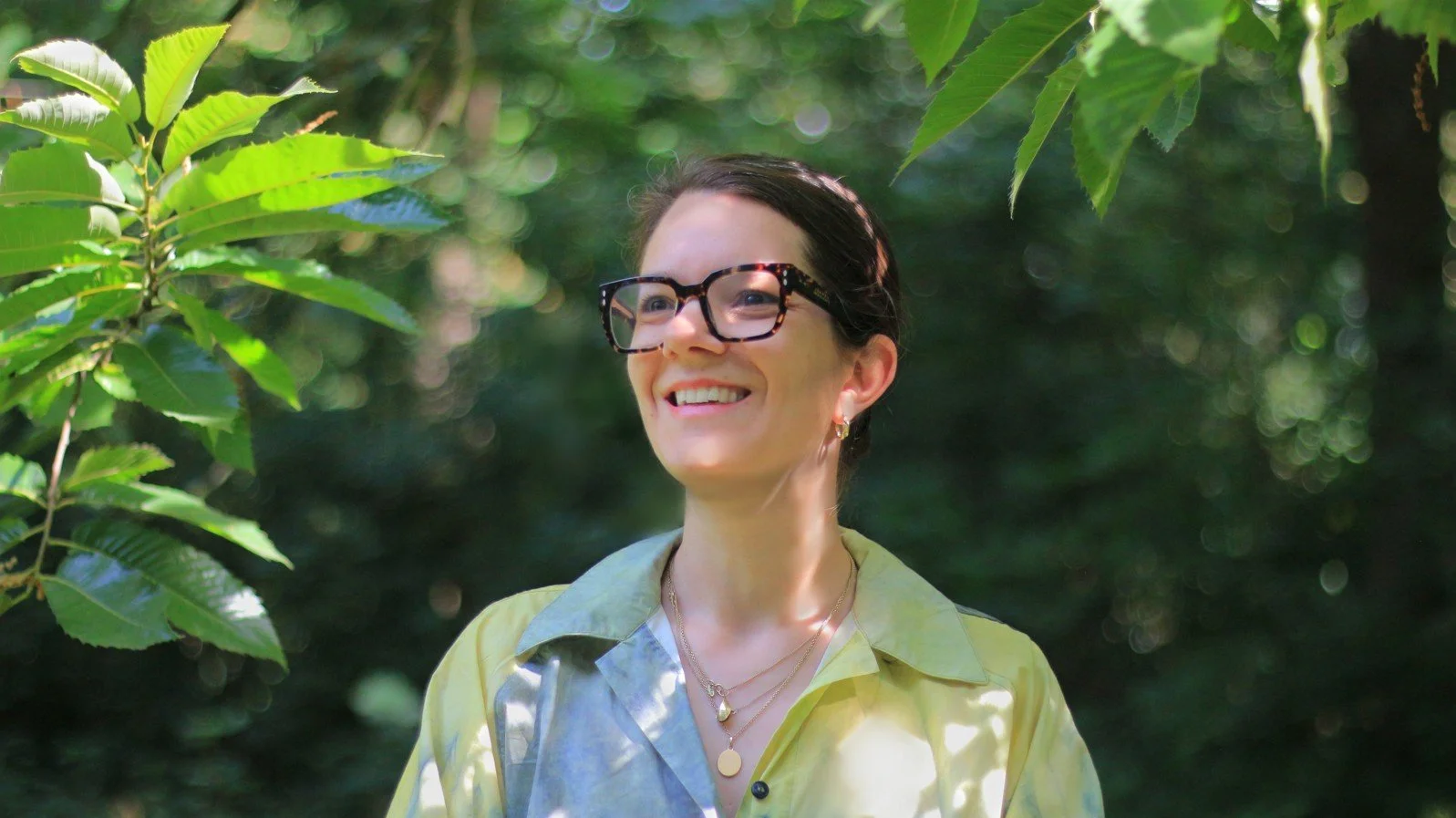
Talk to Dorien Bauwens for a few minutes, and it quickly becomes clear that technology has never been a goal in itself for her. It isn't about the latest innovation or the most advanced technology as such, but about what you can make possible with it. How you bring people together. How you get organizations to collaborate. And above all: how you create societal impact.
Today, at Athumi, she is helping build ecosystems that let governments and companies share data securely. A career that might look logical when you see her at work today, but that actually began with... a history degree.
From history to digitalization
If you read Dorien's bio, you'd expect someone who was into tech from a young age. The reality is different. "Tech really wasn't present at all when I went to study," she says. "I had taken the science-math track, and those were even my strongest subjects, but in 2005 there was no one saying: maybe you should do something with IT."
She chose history, simply because she found it a fascinating field. Looking back, she might make a different choice, she says, but she has never regretted it. "I had fantastic years there."
After her history degree, she realized that finding a job wouldn't be straightforward. So she studied further: business economics, with a specialization in public management. "A job at a nonprofit, an NGO, or in government seemed appealing to me. I've always found it important to do something with societal value."
Did that drive happen to come from her environment? "Both my parents are very values-driven and authentic. They would never do anything that goes against their values," she says. "They're also very willing to help. Take the club where I used to play basketball, for example. Whenever something needed doing, we were there. Especially my father. He was team coordinator for a year for a team his own children didn't even play on, because no one else could be found to do it. Every weekend he drove around a group of kids, none of whom were his son. Those traits and values inspired me to look toward a job with societal relevance."
From basketball to the Flemish government
In January 2011, Dorien started at the Flemish government, at the government personnel agency. A friend had recommended it. "Someone I knew had worked there and said: 'It's good there, you'll like it.' So I took the leap." The work centered on organizational development: strategy exercises, restructurings, process optimization, competency management. She quickly discovered what wasn't for her: writing job descriptions, setting up HR processes. "Very necessary, but just not my thing."
When the government went through a major reorganization, a door opened. A merger led to Informatie Vlaanderen, which later became Digitaal Vlaanderen. "I've always been lucky to be surrounded by colleagues or managers who saw something in me. Two colleagues brought me along to Informatie Vlaanderen back then. What started out being about simplification naturally evolved into IT and digitalization. Simplification without digitalization simply doesn't exist anymore today."
Learning by jumping in
The move to a digital environment could have been intimidating. For Dorien, it wasn't, not really. "I like to learn by doing," she explains. "I don't need to understand and figure out everything first before I jump in. We'll sort it out along the way, en cours de route. On my first team I was still green, but even so: 'Go on, here, just do it. And we'll help you if needed.'"
Her approach sounds simple, but it takes courage.
"The key is surrounding yourself with people who have expertise you don't, and knowing well yourself what you don't know. If you hold on to that and also show some nerve, it works. If you try to cover every risk in advance and want to know everything first, you'll never get there. Or it will take far too long."
She adds something she wants to pass on deliberately: "You also need support. Managers who believe in you and don't throw you under the bus when something goes wrong. I've always had that too. Those people gave me the trust and a safe environment to try things."
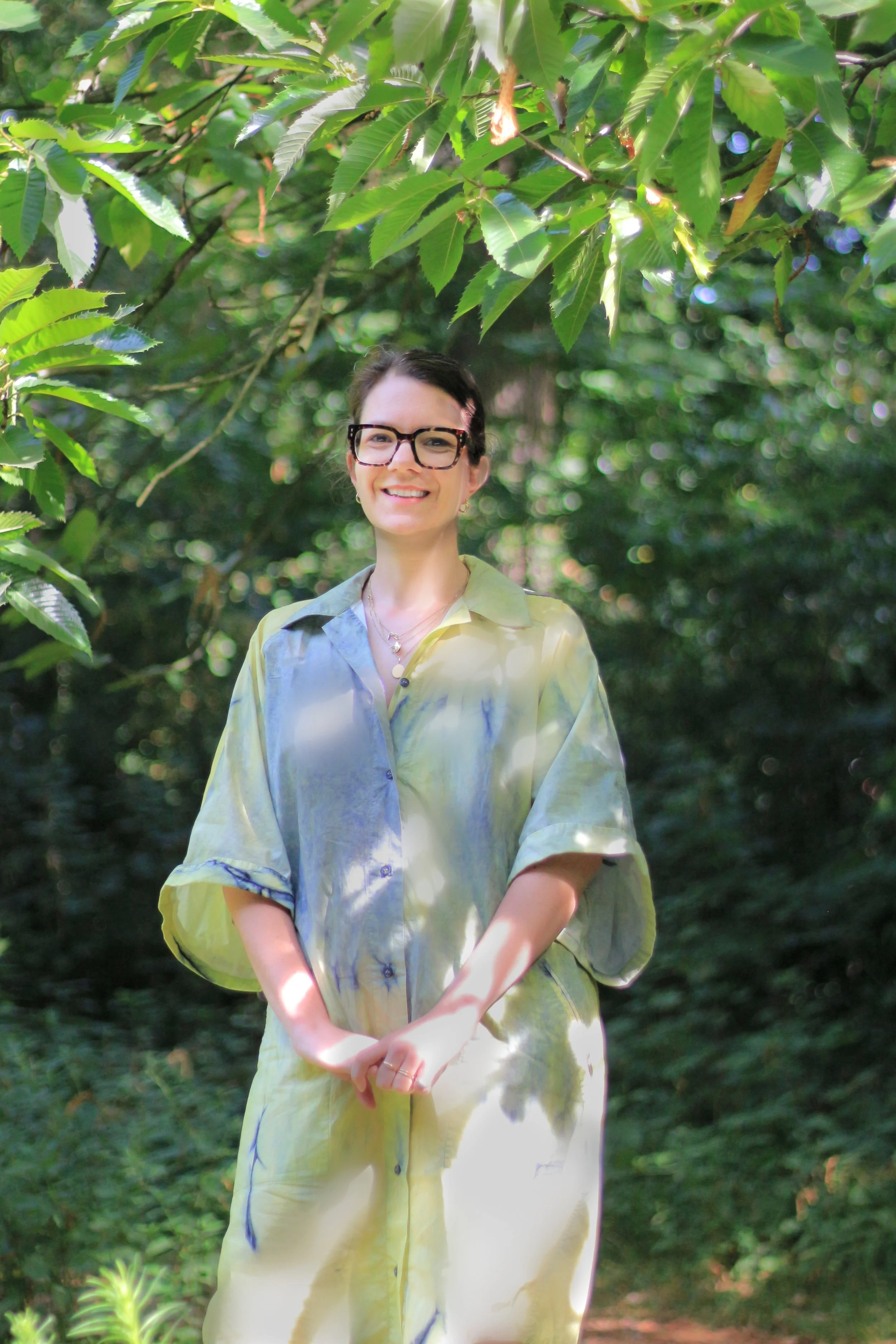
An organic move to Athumi
Her move to Athumi wasn't a carefully calculated career plan. "I've actually made very few conscious career decisions," she laughs. "It's always come more from a gut feeling.
While Athumi was still very much in its early days, she was asked to become product owner.
"I said yes right away. And that's how I ended up on the management team before Athumi even officially existed. That's just my way, too: I always enjoy new things."
What appealed to her? The speed at which decisions could be made. "At a large organization, many layers of decision-making are unavoidable. That's necessary, but I noticed I get energy from shorter lines, more flexibility, and building something together from scratch."
At the same time, an entirely new world came along with it. "We don't receive government funding, so we have to be financially healthy ourselves. Suddenly it was about EBITDA, own revenue... I knew nothing about that at all. That, too, was a new context in which I learned a lot."
Building ecosystems, not just technology
Today Dorien leads the Ecosystem team within Athumi. Ask her what that actually means, and you won't get a technical story about databases or APIs. "Data is still very often locked up within governments and companies, for all sorts of reasons, such as the complexity of the legislation around it, which puts them off. But for everyone, government and business alike, it's hugely important to be able to innovate through data, optimize your services, and stay relevant. What we do, as a neutral party, is make sure that data can flow across sectors, with control resting with the right parties."
In concrete terms, her unit brings the right parties together as a chain and looks together with them at which agreements are needed: financial, legal, technical, organizational, and around governance. "We prepare everything as fully as possible for operationalization. The idea is that we hand this over neatly, on a platter so to speak, to the colleagues who take it from there. Building, setting up, managing: that's their strength. We make sure they can get to work with it."
What does she enjoy most about it? "Difficult questions and projects without a ready-made answer. The challenge and the complexity. And the variety: one week it's the construction sector, the next it's logistics, mobility, or death records. The generalist in me loves that."
Athumi's mission is above all focused on unlocking data securely: making the right agreements, laying the right connections, and getting data flowing between parties that wouldn't do so on their own. "Technological innovation isn't necessarily the differentiating factor there. What really makes the difference is getting organizations aligned and making sure that data actually gets shared. That's usually less technologically innovative than people think, but all the more complex on the human and organizational level."
There's certainly hesitancy among companies, but her approach is pragmatic. "I always look first for a coalition of the willing. Parties who are already convinced and who prioritize it. Because if you have to start convincing people, they won't put time into it either. You need frontrunners first. Eventually you scale up and evangelize. But always in that order."
eLys: removing administrative burden at the hardest moment
One project especially close to her heart is eLys, the platform for digital death declarations, which will become mandatory across Flanders from 2026. For Dorien, it's far more than just a digital platform.
"Everyone deals with loss at some point. If we can make sure that the bereaved spend less time on administration, we give them space to do what really matters: grieve." That kind of societal impact remains her biggest driving force.
"Many of our platforms are less visible than eLys. Think of cable and pipeline information, or other data initiatives. But there's enormous societal value behind those too. We need to keep telling those stories better."
People management: better than expected, more enjoyable than she thought
Notably, for years Dorien had no ambition to become a manager. "I always wanted to have impact, but managing people? I always said that wasn't for me." These days she sees it differently. "I still have a lot to learn, but I notice I'm better at leading a team than I expected. And I find it more enjoyable than I thought, too," she laughs.
What gives her the most satisfaction isn't the managing itself, but seeing people grow. "Building trust. Helping people discover where their strengths lie. And seeing how a team together becomes stronger than each individual apart."
Keeping all the plates spinning
Asked what her biggest challenge is, Dorien answers without much hesitation:
"Keeping all the plates spinning. Family, work, yourself, your friends, your family. The constant juggling, while you only have so many hours in a day."
And is she getting better at it? "Actually worse, if anything," she laughs. "Not because I'm getting less good at it, but because more has been added. Responsibilities keep growing, my daughter now has her own social calendar... Every time I think it can't get any busier, it does anyway. The key is delegating to people you trust. And accepting that every phase of life is different."
What has given her more peace of mind: learn to pick your battles. "I do things well or not at all. That means my level of involvement is high. But the flip side is that I sometimes reacted too strongly to things. In the meantime I've learned to distinguish well between what's essential and what's secondary. You don't have to react to everything immediately. Some things resolve themselves. Others just aren't worth pouring all your energy into."

“Look for people who complement you.”
"No need to hold yourself back"
To women who are hesitant about a career in technology or data, Dorien above all wants to give one message:
"You don't need to know everything."
According to her, the key isn't being perfectly prepared, but knowing where your strengths lie and being honest about what you don't yet know. "Know what you don't know. Not out of modesty, but out of strength. And: look for people who complement you. Find a mentor. Surround yourself with expertise you don't yet have."
At the same time, she advocates for more diversity at the decision-making table. She still notices too often that women are judged differently than their male colleagues, but also stresses that the debate is broader than gender alone. "It's also about background, network, and the social codes you grow up with. Some people learn those naturally, others have to discover them along the way. The whole discussion is much more complex than 'men versus women.' There are so many dimensions to it."
And that's precisely why she finds it so difficult to take a firm position. "You go to the barricades with a broad message, and to me that never feels nuanced enough. I do want to take on a role, starting with my own impact within Athumi. But I'm still looking for the balance between being known for my competence and standing on those barricades. That's the inner conflict."
Perhaps that's what characterizes Dorien most: someone who doesn't claim to have all the answers, but who, again and again, has the courage to take on difficult questions. Because it's precisely there, where different people, organizations, and ideas come together, that she sees the biggest opportunity to create real societal impact.
Thanks to Athumi for supporting women in tech and making this story possible.
Check out their website here.
Stories like Dorien's don't happen by accident.
They happen when companies like Athumi build spaces for women to grow.
Is your company ready for this??
