
Julie Quintin
When you do what you love, work never feels like a chore
Company: Telenet group
Job title: Commercial Insights Analyst
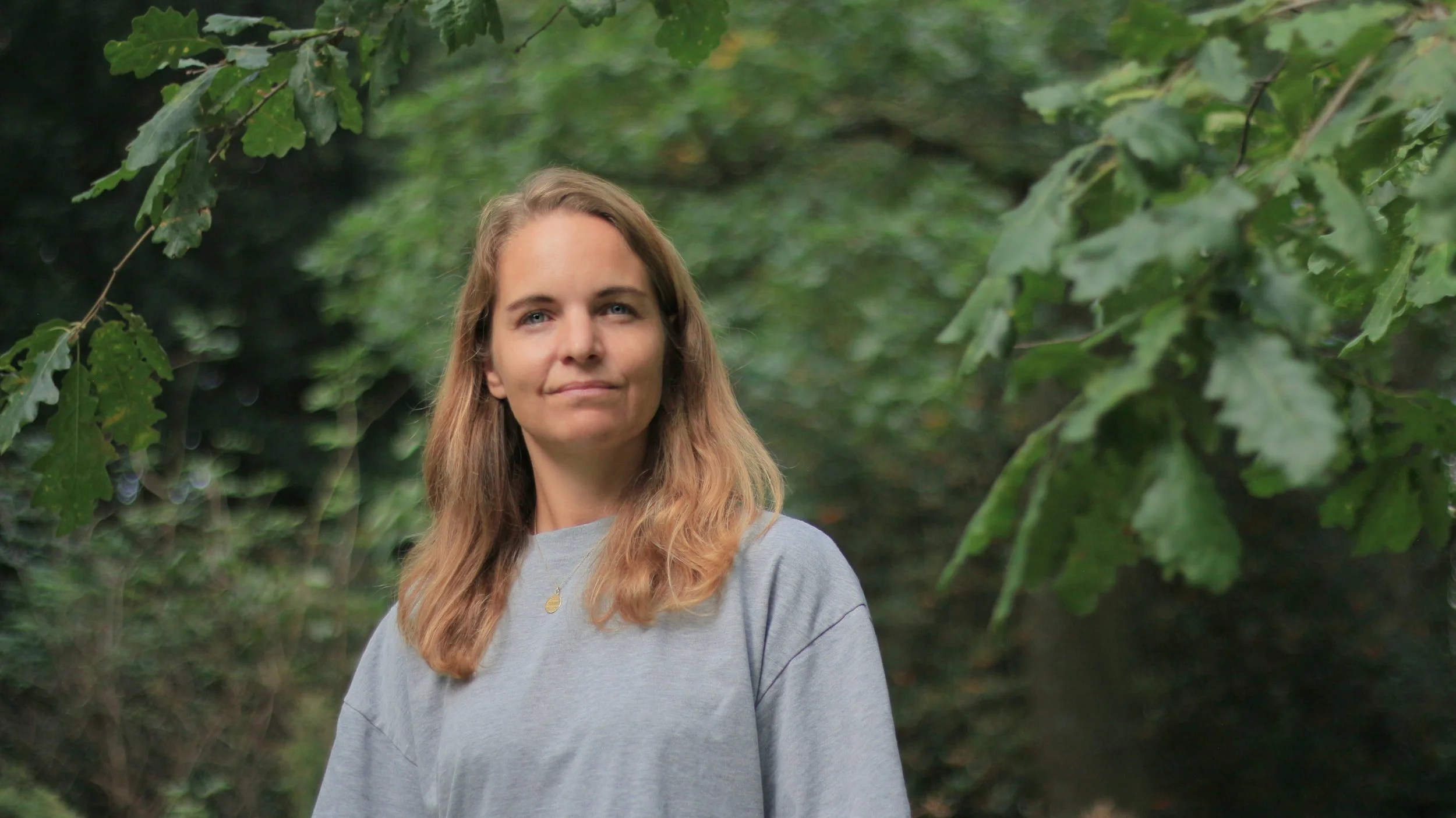
Understanding how things work, has driven Julie Quintin from when she was a child to becoming an Analyst at Telenet group.
She deliberately chose to study Commercial Engineering and went on to build a career centering analysis, numbers, and ever-growing volumes of data. Today, she works as a Commercial Insights Analyst at BASE, part of the Telenet group, and contributes to GenBI, a project at the intersection of generative AI and business intelligence.
From Vespa to Data
“My father is one of the handiest people I know,” Julie begins. “You can ask him to do just about anything, and he’ll do it. If he can’t, he’ll look it up and find a solution.”
She grew up with that mindset: figure things out for yourself and look for your own solution. As a child, she put it into practice quite literally. Among other things, she worked on Vespas with her father. Today, she recognizes the same instinct in her work. “Now it comes down to understanding a dataset and looking for connections.”
“I missed the intellectual challenge.”
During her studies, Julie specialized in logistics. “At 22, I was walking around warehouses in safety shoes and a hard hat.” Just a year later, she was already managing a team of order pickers. But the early, late, and night shifts proved too demanding. A brief stint in operational consulting confirmed what she had already begun to realize: she wanted to do more analysis and dig into complex problems. “I missed the intellectual challenge.”
A Hunger for Challenge
She found it as a pricing analyst at a company where she ultimately spent five years.
At a certain point, she realized that the tools she was used to were limiting her. “I really admired colleagues who used SQL to process larger volumes of data. I remember sitting next to them and thinking: I actually want to do that too.”
Her interest increasingly shifted towards data modelling, but opportunities to develop further in that area were limited.
“Through a friend who worked at the Telenet group, I heard that the company was investing heavily in data and that data played an important role in the business.” For someone who describes herself as very loyal and not one to change employers often, making such a move was no small decision. Nevertheless, she joined the Telenet group in 2022. “I’m still incredibly happy that I dared to take that step.”
Finding a Way to Continue Learning
When Julie joined the Telenet group, she knew she still had a lot to learn technically. “I was really an Excel expert, but that was about it,” she laughs. Rather than waiting for things to happen, she did what she had learned at home: she started figuring out how her new environment worked. She explored apps her colleagues had built, tried to understand how they identified connections, and asked questions whenever she got stuck.
“I was really an Excel expert, but that was about it,”
She could also count on colleagues who shared their knowledge with her. Donny, who has now been with the Telenet group for 25 years, was especially important to her during her first year. “He really took me under his wings. To me, he was my personal walking encyclopaedia.” Later, she joined Suzan Baert’s team, and Suzan became an important influence on her personal development. “Suzan is an outstanding manager. She showed me how much of a difference the right guidance can make. She very deliberately brings people with different strengths together because she truly believes that we shouldn’t all be the same. It’s precisely because everyone brings something different that we make each other stronger. I’ve always felt very valued by her.”
“A team’s strength lies not in being alike, but in complementing one another.”
Julie’s role within the Telenet group continued to evolve.
She started as an Insights & Reporting Analyst and, following a reorganization, joined a central data team, where she deepened her knowledge of statistics and causal relationships.
The work was interesting, but she realized she missed being close to the business. She expressed a desire to reconnect with that side of the organization. Today, she works as a Commercial Insights Analyst for BASE, although she sometimes changes her focus when she sees that her colleagues could use an extra pair of eyes.
Following the reorganization, she was immediately given a new assignment: learn SQL. “I worked intensively on it for two weeks.” She didn’t need much convincing. “My first thought was: great, something new.” Python came later. “I was absolutely delighted. I knew it would open up a whole new world of analysis for me.”
“If, after a year, you have to say you haven’t learned anything, that’s a pretty sad year, isn’t it?”
Julie appreciates having the space within the Telenet group to build this new knowledge. She is also sometimes deliberately challenged to take the next step. Continuous learning has become one of the reasons she enjoys working there. “If, after a year, you have to say you haven’t learned anything, that’s a pretty sad year, isn’t it?”
Looking back today, she is especially proud of how much she has grown: everything she has built together with her team, and how much she has learned along the way. “I didn’t acquire that data knowledge during my studies. I taught myself all of it. Sometimes that came with a lot of frustration, but I kept going.”
“I can’t do it, so let’s figure out how I can learn.”
Untangling Knots of Data
“I think a role in data can be very creative,”
The data Julie works with can quickly feel like an enormous tangle. Turning it into useful, clear insights for the business is something she does well. “I think a role in data can be very creative,” she says. “There’s creativity in solving data issues, and in developing storylines, presentations, charts - you name it. Data isn’t just about numbers; it’s also about creativity.”
What is the biggest challenge in her role? There are always more questions than the data team can answer. Setting priorities is therefore essential. Which analysis will have the greatest impact? Which question needs to be addressed first? And who will have to hear “no” for now? Julie sees a lot of change happening in this area. Rapid developments in AI are creating new opportunities for people in the business to work with data more independently.
GenBI: an AI acceleration
That is exactly where GenBI comes in: a project that brings generative AI and business intelligence together. Its aim is to help colleagues in the business work more independently with data. “It’s basically a kind of ChatGPT, but with the Telenet group’s knowledge built in,” Julie explains.
When asked whether she finds it frightening that GenBI is taking over part of her work, Julie responds pragmatically. “The tool couldn’t exist without us either. It needs continuous maintenance, and we have to keep checking that its answers are accurate.” She also sees it creating room for other kinds of work. “We can focus on the bigger questions instead of all those descriptive queries.”
“You have to stay alert and keep learning all the time.”
Julie has only positive things to say about the Telenet group’s approach to AI. “We dare to embrace new technologies and actively invest in innovation. That’s also one of the reasons I’m so proud to work here.”
The speed of change also demands something from employees. “You have to stay alert and keep learning all the time.” That seems to suit Julie perfectly. Since she joined the Telenet group, no two years have been the same - and she is glad about that.
Work as Me-Time
Julie rarely sits still outside of work either. In June, she completed a half Ironman, to the surprise of some colleagues. “I saw some faces looking at me as if to say: what have you been up to?” she laughs. She is now also preparing for the Antwerp Half Marathon.
With two young children and two parents working full-time, everyday life requires careful organization. The flexibility she gets at the Telenet group makes a real difference.
Interestingly, Julie doesn’t see work as just one more thing to fit into an already busy life. “Work is also a little bit of me-time for me. I have time for my projects, for things I can build and explore myself. I need that.”
“We never really knew that feeling of home. I really want to give that to my children”
“The moment I walk into our offices after the morning rush, I think: okay, peace and quiet.” She laughs. “I’m really glad I can focus on something completely different from nine to six, then switch off and step back into my other role as a mum.”
Becoming a mother has also taught her to put work into perspective more quickly.
“Having children makes you realise that work is just work.” Julie herself grew up with two self-employed parents and spent most of her childhood at boarding school. “We never really knew that feeling of home. I really want to give that to my children: the warmth and comfort of home, and the feeling that it’s their safe haven.”
Paying it forward
For now, Julie is in no hurry to look for another role. “I actually want to become really good at what I’m doing today.”
In the longer term, however, she can see herself taking on a different role: passing on her knowledge. “Just as Donny helped me, I’d like to do the same for others.”
Exactly what that might look like is still open. “Maybe one day I’ll take responsibility for onboarding new colleagues and help them settle into the Telenet group. Or perhaps I’ll be standing in front of a class teaching statistics.”
One thing is crystal clear: “Work should never feel like a chore. You should do what you enjoy and what gives you a sense of fulfilment.”
Thanks to Telenet group for supporting women in tech and making this story possible.
Check out their website here!
Curious about other stories at Telenet group? Read them all here!
Stories like Tinne's don't happen by accident.
They happen when companies like Telenet group build spaces for women to grow.
Is your company ready for this??